

Radiation Safety at Nuclear Power Plants: Principles of Protection and Monitoring
06.08.2026
Meeting with a Veteran: Learning to Understand and Support
26.08.2026
The widespread adoption of digital substations is one of the key areas of modernization in the electric power industry. These facilities enable the integration of renewable energy sources, energy storage systems, demand response systems, and other components of smart grids. They enhance the reliability of the power system, reduce operating costs, and lay the foundation for the digital transformation of the energy sector.
What Is a Digital Substation and How Does It Work
A digital substation (DS) is a modern power facility in which control, relay protection and automation (RPA), measurement, and monitoring processes have been fully digitized. Unlike traditional substations, where information is transmitted via a large number of copper cables, a modern substation features a digital architecture consisting of fiber-optic communication lines and a unified data transmission network. This ensures fast and reliable information exchange between all system components, reduces the number of cable connections, and improves the substation’s overall operational efficiency. While a traditional packaged transformer substation performs the functions of distributing and converting electrical energy, its digital version additionally provides continuous data collection, automatic equipment diagnostics, and integration with modern dispatch control systems.
The international standard IEC 61850 forms the basis of a digital substation; it defines uniform principles for the interaction of intelligent electronic devices (IEDs). Due to this, equipment from different manufacturers can operate within a single information system without complex integration or additional interfaces.
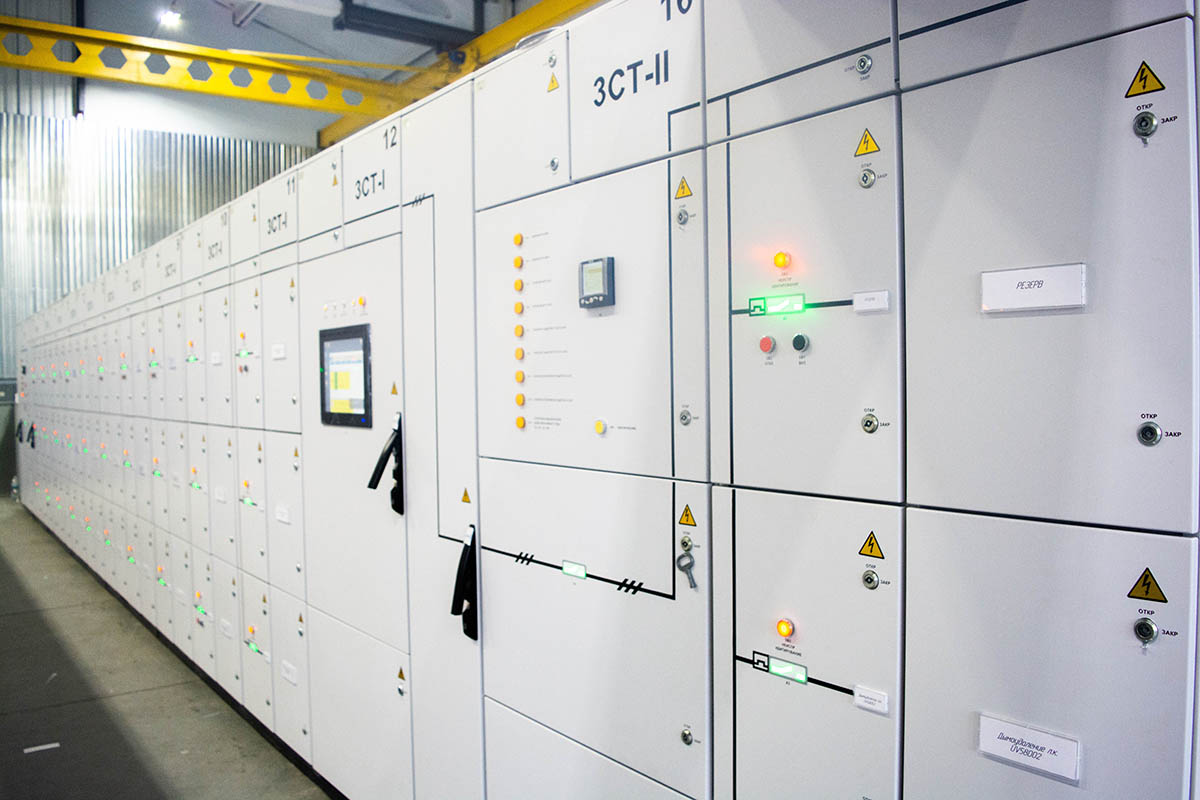
Traditional Substation vs. Digital Substation: What Is the Difference?
Criterion |
Traditional substation |
Digital Substation |
Signal Transmission |
Analog signals are transmitted through a large number of copper cables. |
Data is transmitted in digital format via fiber-optic lines in accordance with the IEC 61850 standard. |
Equipment |
Electromechanical or basic microprocessor-based relay protection, conventional current and voltage transformers. |
Intelligent Electronic Devices (IEDs), digital controllers, merging units, and modern sensors. |
Cabling Systems |
The large volume of copper cables complicates installation and maintenance. |
Minimal cabling due to the use of fiber-optic networks, which simplifies installation and reduces operating costs. |
Maintenance |
Mostly manual monitoring, periodic equipment inspections, risk of damage to insulation and cable connections. |
Continuous monitoring of equipment status, remote diagnostics, automatic fault detection, and prompt response. |
Reliability |
A higher probability of failures due to aging cables and a large number of electrical connections. |
Greater reliability due to digital data exchange, fewer physical connections, and continuous system monitoring. |
Scalability |
Modernization requires significant changes to the cable infrastructure. |
Easy integration with new devices and digital services without requiring a major overhaul. |
Digital Substation Architecture
A typical digital substation consists of two levels of data transmission:
- Station Bus is a top-level network that facilitates the exchange of information between supervisory control and data acquisition (SCADA) systems, controllers, and relay protection and automation devices.
- Process Bus is a low-level network that transmits digital signals directly from primary equipment: current and voltage transformers, circuit breakers, disconnect switches, and other devices.
Merging Units play a key role in this architecture as these devices convert analog signals from measuring transformers into digital format and transmit them over the network in accordance with the IEC 61850-9-2 standard. This significantly reduces the number of cable lines between primary and secondary equipment.
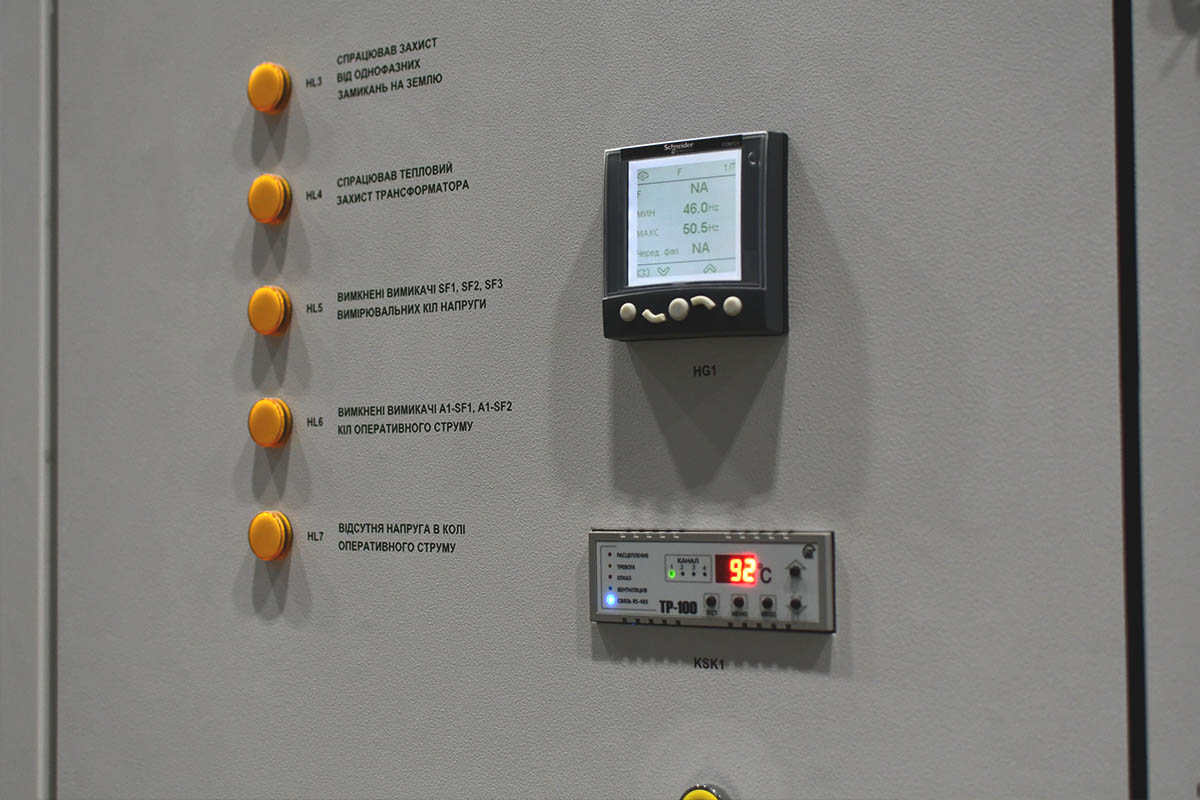
Key Benefits of Digital Substations for Businesses
- Fast data exchange. All signals are transmitted via digital channels with virtually no delay, ensuring a prompt response from relay protection and automation systems.
- Fewer cable products. The use of fiber-optic lines makes it possible to significantly reduce the amount of copper cable required, lower installation costs, and simplify future upgrades to the facility.
- Intelligent network management. Digital substations are a key element of the Smart Grid They automatically identify the location of a fault, isolate the fault, switch to backup power sources, and minimize the duration of outages.
- Real-time monitoring. The system continuously monitors equipment temperature, currents, voltage, load, circuit breaker status, and other parameters. This enables a shift from scheduled maintenance to condition-based maintenance, thereby reducing operating costs.
- High level of cybersecurity. Digital substations are designed to meet current information security requirements. Network segmentation, communication channels redundancy, device authentication, and the application of international cybersecurity standards enhance the resilience of critical infrastructure against cyberattacks.
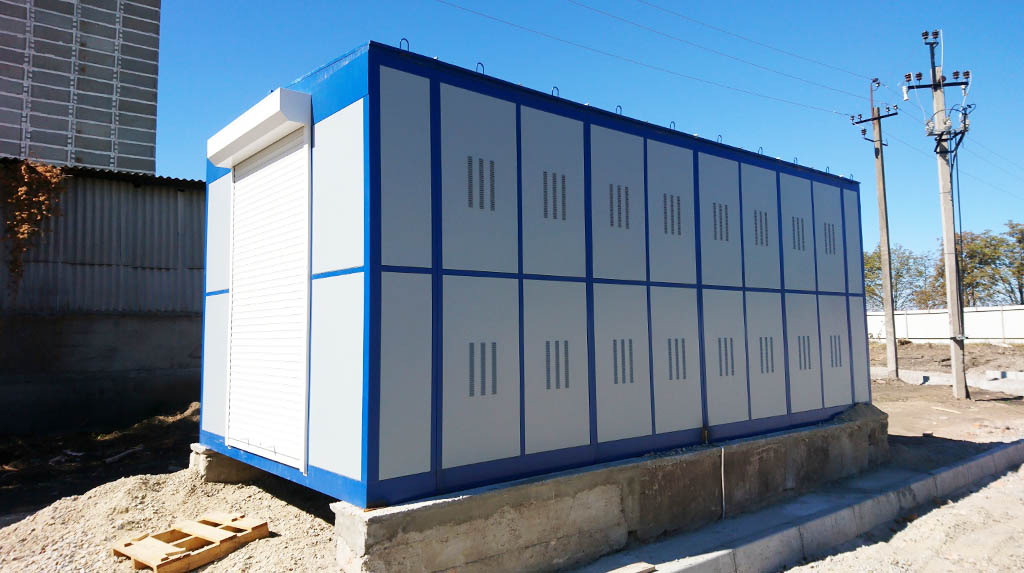
Challenges of Implementation in the Ukrainian Context
Ukraine's first digital substation is currently under construction in the Kyiv region, and it is scheduled to start operating next year. The operation of this new power facility will ensure a reliable electricity supply for over 65,000 households. Mykola Kalashnyk, the Head of the Kyiv Regional Military Administration, provided an update on the project’s progress.
Smart Grid Management
The new substation will be a key component in the restoration and modernization of the Kyiv region’s energy infrastructure, which suffered significant damage during the full-scale war. At the heart of the facility’s operations is a digital control system that analyzes power grid parameters in real time and automatically responds to any deviations. It will quickly pinpoint the location of damage, diagnose equipment issues, and facilitate the rapid containment of outages. As a result, the duration of emergency outages will be reduced, the reliability of the power supply will increase, and technical electricity losses will be minimized.
Preparing for the Future of Energy
The full-scale invasion became an unprecedented challenge for the entire Ukrainian industrial sector. One of the key advantages of the digital substation will be its support for distributed generation. The system will be able to integrate electricity generated by residential solar power plants or wind turbines into the grid, automatically absorbing any excess. In addition, intelligent algorithms will ensure the balancing of electricity flows between local generation sources and the centralized grid, which will improve the efficiency of energy use and the stability of the power system.

